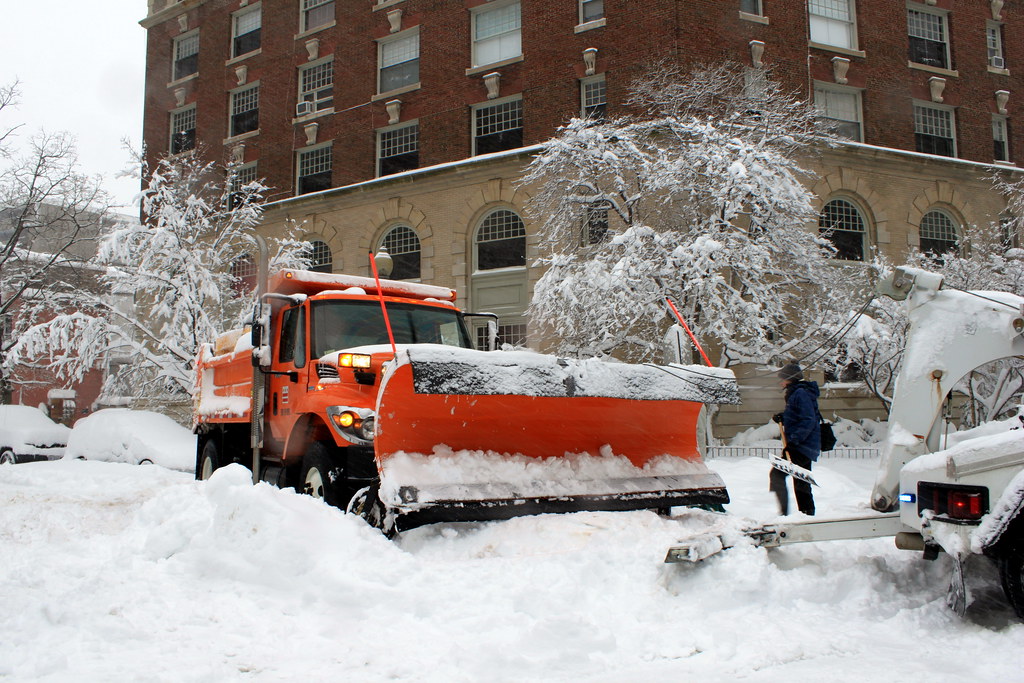
Residential Snow Removal Guide for Woodbury, MN & Hudson, WI
Residential snow removal in the east metro and Hudson area is more involved than most homeowners expect. Driveway plowing is just the starting point. City rules in Woodbury, Stillwater, Hudson, Lakeville, and Rosemount each assign specific sidewalk-clearing obligations to property owners, and a driveway-only contract will leave many homes out of compliance after a storm. Beyond legal requirements, the right service plan depends on your driveway’s slope, whether you have paver edges or landscape lighting at risk, how early you leave in the morning, and how many storms can stack up before pile space runs out. This article breaks down local compliance rules by city, explains how to choose between seasonal and per-push contracts based on your property – not just your budget – covers why plowing and ice control are two separate conversations, and walks through what to confirm before you sign anything.
What City You Live In Changes What Snow Removal You Actually Need
Most service-area homeowners think of snow removal as a single service, but local ordinances make the scope different depending on where you live. Sidewalk compliance is a homeowner responsibility in all five cities, and a driveway-only contract does not cover it.
In Stillwater, property owners must clear snow and ice from public sidewalks within 24 hours after a storm ends. Hudson has an identical 24-hour deadline under city code, with an added requirement: if packed ice cannot be removed, property owners must apply a nonskid material to reduce pedestrian hazard. Lakeville allows 48 hours, which is more forgiving but still puts the obligation squarely on the owner.
In Woodbury, two separate parking restrictions affect how quickly private snow crews can work your street. No on-street parking is allowed between 2 a.m. and 6 a.m. from November 1 through April 1, and no parking is allowed at any time once 2 or more inches accumulate until the street is fully plowed. Curbside vehicles that violate those rules can delay both city plows and private route timing. Woodbury code also prohibits pushing or blowing snow into a public roadway, so your contractor needs a clear on-site pile plan from the start.
In Rosemount, the city plows main collector streets and high-volume routes first, then school and commercial areas, then lower-volume residential streets. Homeowners on quieter neighborhood streets should expect to be later in the municipal queue during larger events, which means relying on city plowing alone after a significant storm is not a practical plan.

Matching the Service Plan to the Property, Not Just the Forecast
Before deciding on contract type or trigger depth, walk your property and identify where the real risks are. A flat asphalt driveway with no sidewalk frontage has different needs than a steep concrete drive with a paver apron, a corner lot with two sidewalk edges, and landscape lighting near the approach.
Properties that typically need more comprehensive service include:
- Steep driveways that ice over faster than flat surfaces and require more attention after freeze-thaw cycles
- Corner lots with multiple sidewalk frontages and higher pedestrian exposure
- Homes with paver driveways, paver aprons, or decorative stone edges that can be damaged by aggressive blade angles
- Properties with landscape lighting, retaining walls, or low edging that disappear under drifting snow and become plow targets
- Curved driveways where blade position changes frequently and boundaries are harder to follow
- Mailboxes or utility boxes near the street edge that need a clear pile-placement plan to avoid damage
Snow pile placement is an underestimated problem by the time a neighborhood has seen five or six storms. Each push adds to existing piles, and without a designated location established before winter, crews end up improvising in ways that can block sightlines, cover hydrants, or bury mail access. Lakeville notes that downtown pile removal may be scheduled when accumulation exceeds 12 inches. On residential lots, that problem shows up much sooner on tighter sites.
A provider worth hiring will walk the property before the first storm, stake driveway edges and any plow-sensitive features, and confirm pile locations in writing. That walkthrough is one of the clearest signals you’re hiring someone trying to prevent damage rather than react to it.
Seasonal vs. Per-Push vs. Per-Event: Which Contract Fits Your Situation
Contract type is often framed as a price decision, but it’s really a reliability decision. The three common structures each carry different risk profiles.
Seasonal contracts cover an entire winter for a flat rate regardless of storm count. You pay the same whether it snows eight times or eighteen times. That predictability is worth it when:
- You leave for work early in the morning and the driveway must be clear before a set time
- Your driveway has a significant slope where ice accumulates quickly
- You have mobility concerns or regular pedestrian visits that make delays a safety issue
- You’re on a corner lot with sidewalk obligations that require attention every storm
- You want guaranteed route placement rather than on-call availability
Per-push contracts charge per visit, usually once snow hits a trigger depth. This can work well for vacation properties, lightly used homes, or situations where a delayed response after a storm is acceptable. The tradeoff is cost variability in a heavy season and the possibility of lower priority during large events when routes are full.
Per-event contracts group all service within a defined storm period into a single charge. The billing is broader but may still leave gaps around timing and scope if the contract is vague.
Regardless of contract type, every agreement should state four things clearly: the trigger depth (commonly 2 inches for residential, but verify this in writing), the response window after that trigger is reached, whether sidewalk clearing is included or separate, and whether de-icing is included or billed additionally. Missing any of those four details is the most common source of disputes between homeowners and snow contractors.
Why Plowing and Ice Control Are Two Different Conversations
Plowing removes bulk snow. It does not automatically remove compacted snowpack, black ice, or the refreeze layer that forms after daytime melt cools overnight. Those are different problems that require different tools, and assuming de-icing is bundled with plowing is one of the more frustrating winter surprises a homeowner can encounter.
Salt is the most common de-icer, but its effectiveness drops sharply as pavement temperatures fall below roughly 15 to 20 degrees Fahrenheit. During a Minnesota or Wisconsin cold snap, excess salt application does little to melt ice and leaves residue without solving the problem. Alternate ice-control chemistry or mechanical scraping becomes more important in those conditions.
When reviewing a contract, ask specifically:
- Is de-icing included, and if so, what product is used?
- Under what temperature conditions does the approach change?
- Does the crew treat after plowing, before freezing rain events, or both?
- Are steps, landings, and walkways included, or just the driveway surface?
For homeowners with paver driveways or paver aprons, this conversation matters even more. Some de-icing products can stain or damage paver surfaces over time. That detail should be flagged before winter, not discovered in spring.
How to Set Up Your Snow Removal Plan Before Winter Starts
Working through this sequence before the first storm prevents most of the common complaints homeowners have by February:
- Check your city’s sidewalk rules. Stillwater and Hudson require clearing within 24 hours. Lakeville allows 48 hours. Woodbury prohibits pushing snow into the street. Know what’s required before you define your service scope.
- Map your property’s vulnerable areas. Note driveway slope, frontage type, paver or decorative edges, landscape lighting locations, mailbox placement, and available pile space.
- Decide your service scope. Driveway-only, driveway plus sidewalk, or full approach including steps and landings. If you have public sidewalk frontage, sidewalk clearing should be included.
- Choose your contract type based on your timing needs and how much service variability you can accept. Seasonal is the right fit when timing predictability matters every storm.
- Confirm ice control terms in writing. Know what product is used, when it’s applied, and what happens when temperatures drop below effective salt range.
- Confirm pile placement before the season starts. A designated pile location agreed upon before winter avoids improvised decisions that block sightlines or bury utilities.
One final note for fall prep: if you need driveway markers installed, edging staked, or any other ground disturbance before freeze-up, contact 811 through Gopher State One Call before breaking ground to avoid hitting buried utilities during staking or pre-winter work.
Common Questions About Residential Snow Removal
Do I need to clear the sidewalk if I hire driveway snow removal?
Usually yes, unless your contract specifically includes sidewalk clearing. In Stillwater and Hudson, the 24-hour sidewalk-clearing deadline applies to the property owner, and a driveway-only contract does not satisfy that requirement. Lakeville gives 48 hours, but the obligation still falls on you until your contractor covers it.
Is seasonal service worth it for a home in the east metro or Hudson area?
For most homes where timing matters – early work departures, steep drives, corner lots with sidewalk frontage, or households with mobility concerns – seasonal service is the more reliable choice. Per-push works for lighter-use properties that can accept a variable response window without significant safety or schedule impact.
Why can my driveway still be slippery after it was plowed?
Plowing removes bulk snow but leaves behind compacted pack and any refreeze layer. When overnight temperatures drop significantly after a daytime melt, the surface can be more dangerous after a plow visit than before. Ice control needs to be addressed separately and specifically in your contract.
What should a snow removal contract include besides the plowing price?
At minimum: trigger depth, response window, service scope (driveway only or driveway plus sidewalk), de-icing terms, and designated snow pile locations. If any of those are missing, you’re making assumptions that often don’t match what the contractor is planning to deliver.
Schedule Your Residential Snow Removal Service Before Routes Fill
LNG Landscapes provides residential snow removal for homeowners in Woodbury, Rosemount, Stillwater, Lakeville, and Hudson, WI. Service routes are built before the season, and early signups get better placement than requests that come in after the first storm. Whether your property needs driveway-only plowing or a full plan that includes sidewalks and ice control, the conversation starts now. Call 651-302-0266 to discuss your property and get set up before winter arrives.