When to Start Planning Your Patio Project
Planning a patio project in Woodbury, MN takes longer than most homeowners expect, and the gap between when you start planning and when crews break ground is where most timelines slip. In a hard-freeze climate like the Twin Cities metro, the build season runs roughly from late April through fall, but contractors fill their spring schedules over the winter months. That means a homeowner who starts the design conversation in January or February has real leverage over their start date, while someone who calls in May is often looking at a late-summer or fall installation window. This article walks through the design-build sequence step by step, what to do first, what each stage decides, and what can quietly push your project back if you are not prepared. It applies to Woodbury, Rosemount, Stillwater, Lakeville, and Hudson, WI, all within LNG Landscapes’ service area.

Why Winter Is Your First Productive Phase
Once the ground freezes in Minnesota, construction stops, but design and planning do not. The November-through-February stretch is the best time to request an estimate, walk the site with a designer, and lock in the layout and feature scope before the spring rush compresses your schedule. Industry guidance for Minnesota design-build projects consistently identifies late fall and winter as the planning window precisely because it frees up the spring calendar for actual construction.
At LNG Landscapes, design-build estimates are available on-site, and the outdoor living process includes both 2D and 3D design options. Working through layout choices and reviewing rendered options during winter means you are not making material decisions under a construction deadline. Decisions made in the planning phase determine your project’s scope, budget range, and schedule slot, change them later, and each one can ripple into material reorders, revised drawings, and rescheduled crews.
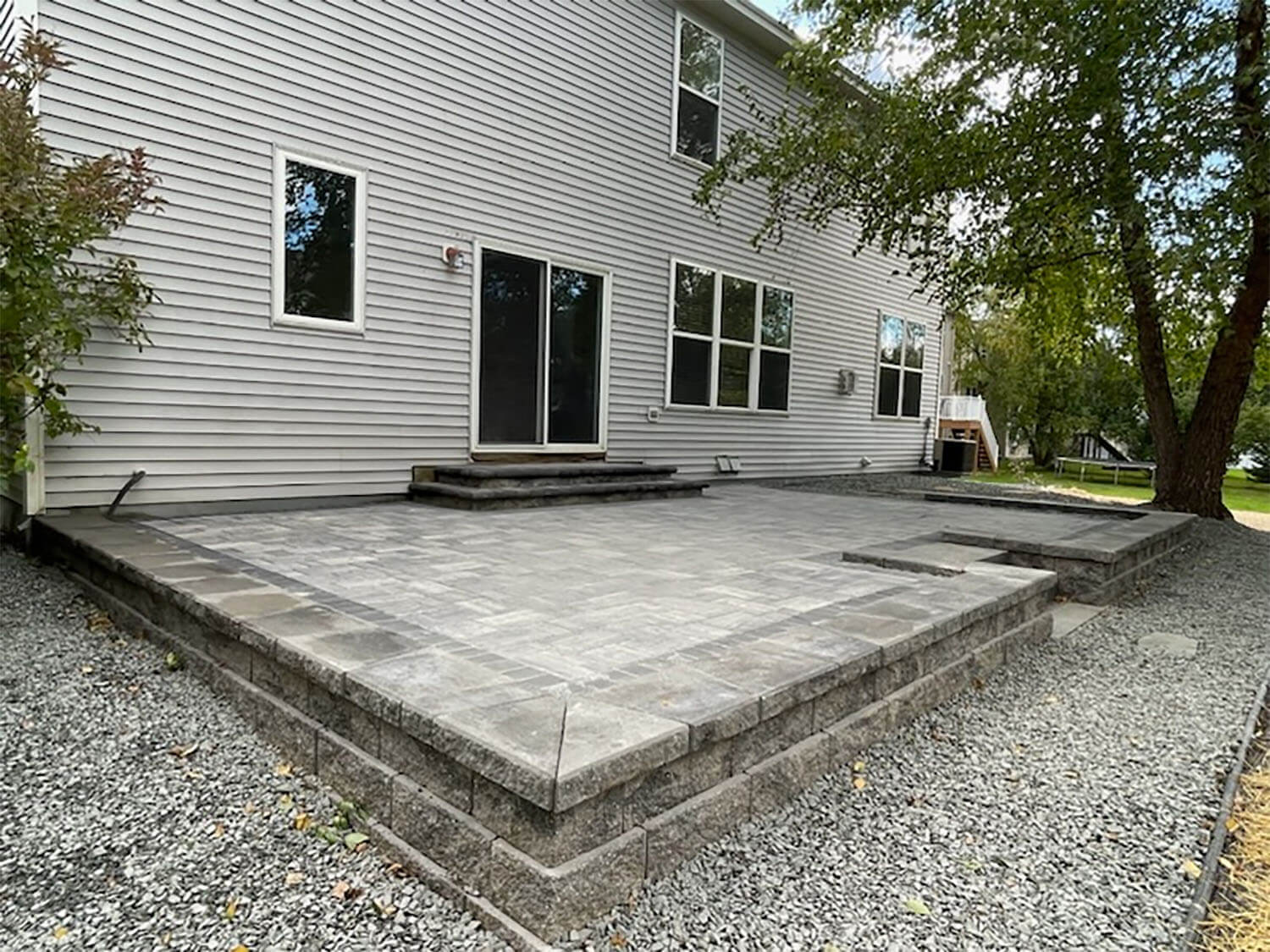
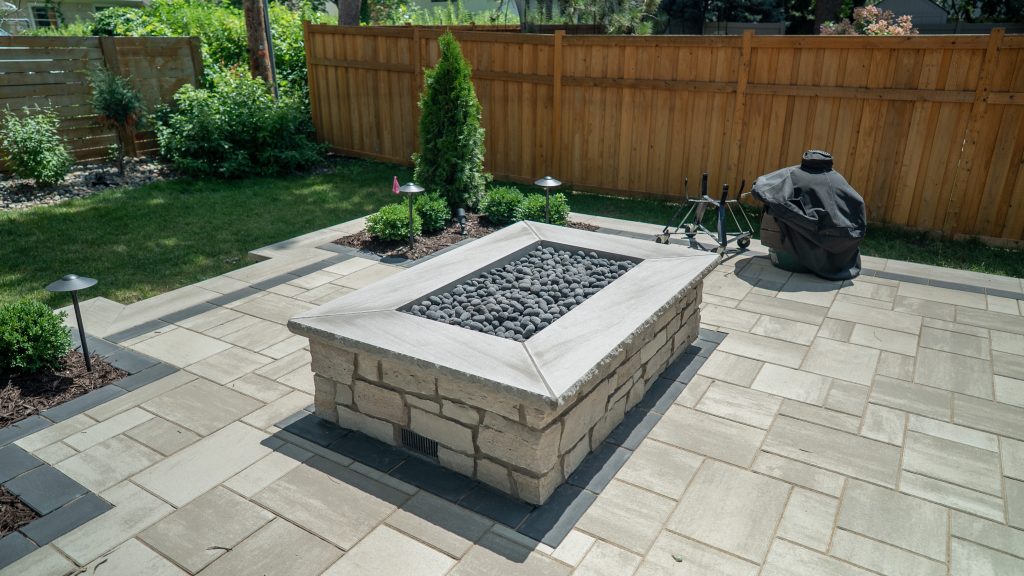
If your patio project includes adjacent features, retaining walls, seating walls, steps, pergolas, an outdoor kitchen, a fireplace, or lighting, those elements need to be scoped together, not added one at a time after installation begins. Sequencing matters for excavation, drainage, and utility routing, and surprises mid-build are the most common cause of timeline delays.
The Decision Stages, in Order
A patio project is not a single decision followed by a construction day. It is a series of choices, each of which unlocks the next step. Missing or slowing any one of them stalls what follows.
- Site consultation and rough scope: Establishes the patio location, approximate size, and which outdoor living elements belong in the same project. This is also when grade, drainage, and any easement concerns on the property should surface. Woodbury properties near utility corridors or drainage easements may have placement constraints worth identifying before design goes further.
- Layout and feature decisions: Locks in the footprint, elevation changes, stair locations, and any structures like pergolas or fireplaces that affect the permit review. Some patio-adjacent features, including certain electrical elements and fireplaces, may require permits and drawings in Woodbury. The City of Woodbury uses a combination permit system for projects requiring review, and knowing this early prevents late-stage surprises.
- Material selection: Chooses the paver type, stone, edging, wall materials, and any specialty elements. Material lead times vary, and some products are seasonal or require ordering ahead. Approving materials before the construction season opens is what prevents a delayed start while crews wait on a supplier.
- Utility locating: Before any excavation, Minnesota law requires a locate request through Gopher State One Call at least 48 hours in advance, excluding weekends and holidays, and up to 14 days ahead. This is a fixed scheduling step that cannot be skipped or compressed, so it needs to be built into the pre-construction timeline, not treated as a same-week task.
- Scheduling and contract: A signed quote locks your build slot. Contractors filling their spring rosters over winter is not a sales tactic, it reflects the fact that the installation season is genuinely finite in Minnesota. Homeowners with approved designs and signed contracts in February get earlier access to late April and May start dates.
- Installation: On-site work for a patio project, once design is finalized and materials are staged, typically runs one to three weeks depending on project size, the number of walls or steps, and weather. That is the visible phase most homeowners picture when they think about how long it takes, but it is the last stage of a process that may have begun four to five months earlier.
What Can Push Your Timeline Back
Schedule delays on hardscape projects in Minnesota cluster around a predictable set of causes, and most of them occur before a shovel touches the ground. Slow feedback on design reviews and late scope changes after materials have been ordered are the two most disruptive. If a homeowner asks to extend the patio footprint or add a feature after construction begins, that change can require additional materials, revised grading, and rescheduled crews.
Weather and saturated soils are a separate but real variable in Minnesota springs. Freeze-thaw cycles in March and April can leave the ground unworkable even after the official thaw, pushing excavation and compaction work back by days or weeks. This is why late April is a realistic rather than guaranteed start date, and why a finished design and locked contract position you to move quickly when conditions allow rather than waiting in a queue.
Woodbury-specific constraints are worth flagging during the site consultation, not after. The city’s guidance discourages extensive landscaping in easement areas due to drainage concerns and future utility access. If a proposed patio layout overlaps with an easement corridor, shifting it early costs far less than redesigning after permits or construction has started.
Can You Still Build in Fall, or Is Spring the Only Window?
Fall is a legitimate hardscape season in Minnesota, and in some years it offers more stable working conditions than a wet spring. Pavers and stone can be installed as long as ground temperatures and weather allow compaction and setting, and many projects wrap successfully in September and October. The catch is that a fall installation still requires a full design-build process preceding it. Someone who starts the design conversation in July is not guaranteed a September start, material lead times, scheduling, and site prep still apply.
The practical implication: if you missed the winter planning window and are starting in late spring or summer, the question is not whether fall installation is acceptable. It almost always is. The question is whether the design process can move quickly enough to stay ahead of the installation calendar. Slow approvals or late material decisions in a summer start are what actually push a project into next year.
After installation, LNG Landscapes conducts a walkthrough with the homeowner upon project completion and follows up after one year. After-care instructions are also available on the website. Knowing that post-installation support is part of the process is worth factoring in when evaluating what a completed project actually delivers.
Frequently Asked Questions
How long does a patio project take from first estimate to finished installation?
The on-site installation phase for a paver patio typically runs one to three weeks, depending on project size and features. But the full path from first estimate through design, material approvals, utility locating, and scheduling often spans several months. Starting in winter gives you the most scheduling flexibility and the best chance of a spring or early summer completion.
Can a patio be installed in fall in Woodbury, or is spring always better?
Fall installation is a viable option in Minnesota as long as ground conditions allow. The limiting factor is not the season itself but whether the design and material selection process is complete before the installation window closes. A fall build requires the same full planning sequence, just compressed into a shorter lead time.
What can delay a patio project after the design is already approved?
The most common post-approval delays are scope changes after materials have been ordered, weather and saturated ground conditions in spring, and utility locate scheduling that was not built into the pre-construction timeline. Site-specific constraints, such as easements or drainage requirements in Woodbury, can also add steps if they were not identified early in the design phase.
Start Your Patio Project Planning with LNG Landscapes
If you are considering a patio, retaining wall, outdoor kitchen, or any part of a larger outdoor living project, the best time to start the conversation is before the construction season begins. LNG Landscapes offers on-site estimates for design-build work and provides both 2D and 3D design options to help you finalize layout and materials before crews are scheduled. Paver and stone patio installations are backed by a 2-year warranty.
LNG Landscapes serves homeowners in Woodbury, Rosemount, Stillwater, Lakeville, and Hudson, WI. Explore the full Patio Installation service or browse the complete Outdoor Living services to see the full range of features that can be planned alongside your patio. To schedule an estimate, call LNG Landscapes at 651-302-0266.